Five-Minute Learning Moments
Simple ways to practice counting, language and observation during ordinary daily routines.
Learning with a young child does not always need a worksheet, a carefully planned activity or a long block of time.
Some of the most useful learning moments happen during routines that are already part of your day: getting dressed, making a snack, riding in the car, cleaning up toys or walking to the mailbox.
A few minutes of conversation, counting, noticing and wondering can help children build language, early math skills, attention and confidence without making the day feel like school.
The goal is not to turn every routine into a lesson. The goal is to notice simple opportunities when they happen and invite your child to participate.
What Is a Five-Minute Learning Moment?
A five-minute learning moment is a short, playful interaction connected to something you are already doing.
It might mean:
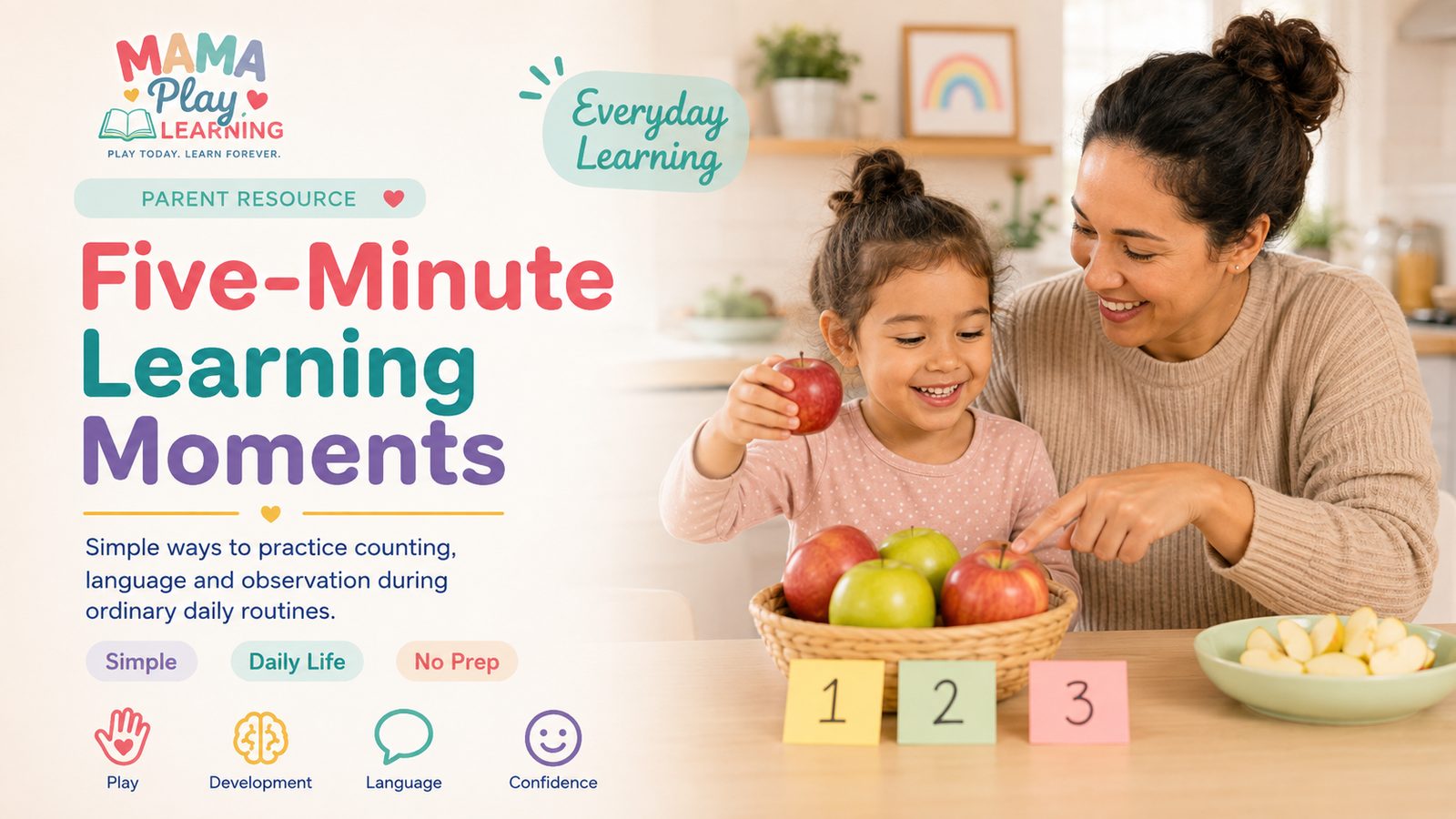
- Counting apple slices at snack time
- Comparing two socks while getting dressed
- Looking for circles during a walk
- Talking about the sounds you hear outside
- Sorting toys while cleaning up
- Predicting what will happen while cooking
These moments are simple because the materials, setting and reason for the activity already exist.
1. Count During Snack Time
Snack time offers an easy way to practice one-to-one counting. Place a few pieces of fruit, crackers or another familiar snack on the plate and count them together.
For younger children, point to each item as you count. Older preschoolers can help distribute equal amounts or answer simple questions such as:
- “How many do you have?”
- “What happens if we add one more?”
- “Which group has more?”
- “How many will be left after you eat one?”
Keep the numbers small enough that your child can participate without becoming frustrated.
2. Talk While Getting Dressed
Getting dressed is filled with opportunities to build vocabulary and notice similarities and differences.
You can talk about:
- Colors and patterns
- Long and short sleeves
- Soft, smooth, rough or fuzzy textures
- Front, back, inside and outside
- Matching socks
- Weather and clothing choices
This kind of conversation develops language naturally because the words are connected to something your child can see and touch.
3. Sort While Cleaning Up
Cleaning up can become a simple sorting activity.
Invite your child to group objects by:
- Type
- Color
- Size
- Where they belong
- What they are used for
Sorting helps children recognize patterns and categories. It also gives the cleanup routine a clear, manageable structure.
4. Look for Shapes on a Walk
A short walk can become an observation game.
Choose one shape and look for examples together:
- Circles on wheels, signs or lids
- Rectangles on doors and windows
- Triangles on roofs or warning signs
- Squares on tiles or sidewalk sections
You can also look for colors, letters, animals, vehicles or objects that begin with a certain sound.
5. Build Language in the Car
Car rides can be useful for conversation, especially when you keep the activity simple enough that it does not distract you from driving.
Try:
- Naming things you pass
- Listening for environmental sounds
- Finishing familiar rhymes
- Talking about where you are going
- Describing what happened earlier in the day
Questions with more than one possible answer encourage children to observe and explain rather than search for one “correct” response.
6. Compare Objects While Putting Away Groceries
Groceries provide real objects for comparing size, weight, shape and quantity.
You might ask:
- “Which container is taller?”
- “Which one feels heavier?”
- “Can you find two things that are the same color?”
- “Which items belong in the refrigerator?”
- “How many cans are in this bag?”
Children can also help place safe, lightweight items in the correct location.
7. Notice Sounds During Bath Time
Bath time can support listening and descriptive language.
Explore sounds by:
- Pouring water slowly and quickly
- Tapping two bath toys together
- Squeezing water from a sponge
- Listening for splashes
- Making quiet and loud sounds
Always supervise children closely around water.
8. Practice Sequencing During Routines
Daily routines help children learn that events happen in an order.
Use words such as:
- First
- Next
- Then
- Last
- Before
- After
Sequencing supports memory, comprehension and a child’s understanding of what comes next.
9. Ask Observation Questions Outside
You do not need to know every scientific answer to encourage curiosity.
Try asking:
- “What do you notice?”
- “How are these leaves different?”
- “Which rock feels smoother?”
- “Where do you think that ant is going?”
- “What changed since yesterday?”
Give your child time to look and respond. A pause can be more helpful than quickly supplying the answer.
10. Make Waiting Time Useful
Waiting at an appointment, in a checkout line or before food is ready can be difficult for young children. A tiny learning game can help pass the time.
I Spy
Choose an object by color, shape or beginning sound and let your child guess.
Category Challenge
Name animals, foods, colors or things that move.
Finish the Pattern
Say a simple pattern such as clap, tap, clap, tap and ask what comes next.
What Changed?
Move or hide one safe object and ask your child to notice what is different.
Follow Your Child’s Attention
A learning moment works best when your child is interested and comfortable.
It is okay to stop when your child:
- Turns away
- Becomes frustrated
- Changes the subject
- Wants to move on
- Needs help with the routine itself
Five minutes is not a requirement. Some moments may last thirty seconds. Others may naturally continue longer.
The value comes from connection and participation, not from reaching a particular time goal.
Avoid Turning Every Moment Into a Test
Repeatedly asking children to name colors, numbers or letters can begin to feel like a quiz.
Mix questions with comments and observations.
Instead of only asking:
You might say:
This models useful language without putting pressure on your child to perform.
Helpful Supplies for Everyday Learning
You can do nearly every activity in this article with household objects. The products below are optional ideas for families who want a few reusable learning materials.
Optional Learning Tools
Counting Bears or Counters
Useful for counting, sorting, color matching and simple patterns.
View Counting ToolsReusable Activity Cards
Helpful for quick shape, color, matching and observation games.
View Activity CardsChild-Safe Magnifying Glass
Encourages close observation of leaves, rocks and outdoor discoveries.
View Exploration ToolsSorting Bowls or Trays
Useful for grouping safe objects by size, type, color or texture.
View Sorting SuppliesA Reminder for Busy Parents and Caregivers
You do not have to create a special activity every day.
You are already surrounded by opportunities to count, compare, describe, sort, remember and wonder together.
A trip to the kitchen can become a counting moment. Getting dressed can become a conversation about texture and weather. Cleaning up can become a sorting activity. A short walk can become an observation game.
These small interactions matter because they connect learning to real life and to a trusted adult.
MamaPlayLearning Takeaway
Learning does not have to be long, complicated or perfectly planned.
Five playful minutes during an ordinary routine can support language, early math, observation, memory and confidence. Follow your child’s interest, keep the pressure low and let the conversation grow naturally.
Keep learning through everyday moments
Explore MamaPlayLearning games, storybooks and free worksheets created to make early learning playful and approachable.