Creating a Gentle Learning Routine
Build a flexible rhythm that includes practice, play, movement and rest without pressure.
Many parents want to support learning at home, but the idea of a routine can quickly start to sound like a full school schedule.
For young children, that usually is not what works best. A helpful home learning routine should feel supportive, predictable and realistic—not rigid, overwhelming or hard to maintain.
A gentle learning routine gives children a rhythm they can count on while still leaving room for play, movement, rest, family life and ordinary childhood moments.
The goal is not to recreate a classroom at home. The goal is to create a calm flow that helps learning happen naturally.
What Is a Gentle Learning Routine?
A gentle learning routine is a flexible pattern for the day that includes a few predictable learning moments without turning every hour into a lesson.
It might include:
- A short book after breakfast
- A five-minute skill activity before free play
- A movement break between quieter tasks
- Outdoor exploration in the afternoon
- A calming story before rest or bedtime
The routine does not need to look the same every day. It simply needs enough consistency that your child begins to understand what usually comes next.
Start with the Day You Already Have
One of the easiest mistakes to make is trying to build an entirely new schedule from scratch.
Instead, look at the rhythms your family already has and gently add learning into them.
When learning is connected to routines that are already familiar, it often feels easier for both the adult and the child.
You might connect learning to times such as:
- After breakfast
- Before or after nap time
- During snack time
- Before outdoor play
- After coming home from childcare or preschool
- Before bedtime
Keep Practice Short and Clear
Young children rarely need long periods of formal practice. A short, focused activity can be more effective than a long one that leads to frustration.
Practice time might be:
- Tracing one letter
- Counting ten objects
- Matching shapes
- Reviewing one sight word
- Talking about beginning sounds
- Completing one page, not five
When the goal is small and clear, children are more likely to feel successful.
Less can be more
Stopping while your child is still comfortable and engaged often works better than pushing until they are tired or upset.
Make Room for Play
Play should not be treated as a reward children earn only after “real learning” is finished.
For young children, play is one of the main ways learning happens. Pretend play, building, puzzles, sensory play, conversation, drawing and exploration all help children practice important skills.
That means a balanced routine may include:
- Open-ended toy play
- Dress-up or pretend play
- Blocks and building materials
- Coloring or art
- Simple board games
- Outdoor nature play
If a child spends time deeply engaged in play, that time is not being wasted. It is often one of the most valuable parts of the day.
Do Not Forget Movement
Children often need movement in order to regulate attention, energy and mood.
A gentle routine should leave room for active moments, such as:
- Dancing to music
- Going outside
- Stretching
- Animal walks
- A short obstacle path
- A walk through the house or yard
Movement breaks can help prevent small frustrations from building into bigger ones.
Rest and Quiet Time Matter Too
Balance does not only mean switching between work and play. It also means making space for quiet, rest and recovery.
Children may need:
- Nap time or rest time
- A calm reading break
- Quiet toy play
- A snack and cuddle break
- Time with less stimulation
These calmer periods are part of a healthy routine. They give children space to reset and often make later learning moments easier.
A Simple Routine Can Be Enough
Your day does not need a long list of blocks and subjects. A simple pattern is often enough.
Morning Example
Breakfast → short book → simple skill practice → free play → snack → outdoor time
Afternoon Example
Lunch → rest or quiet time → hands-on activity → movement break → pretend play → story
Very Short Routine
Book → five-minute practice → play. Even this can be enough for some families.
Bedtime Learning Rhythm
Bath → pajamas → storytime → calm conversation → sleep
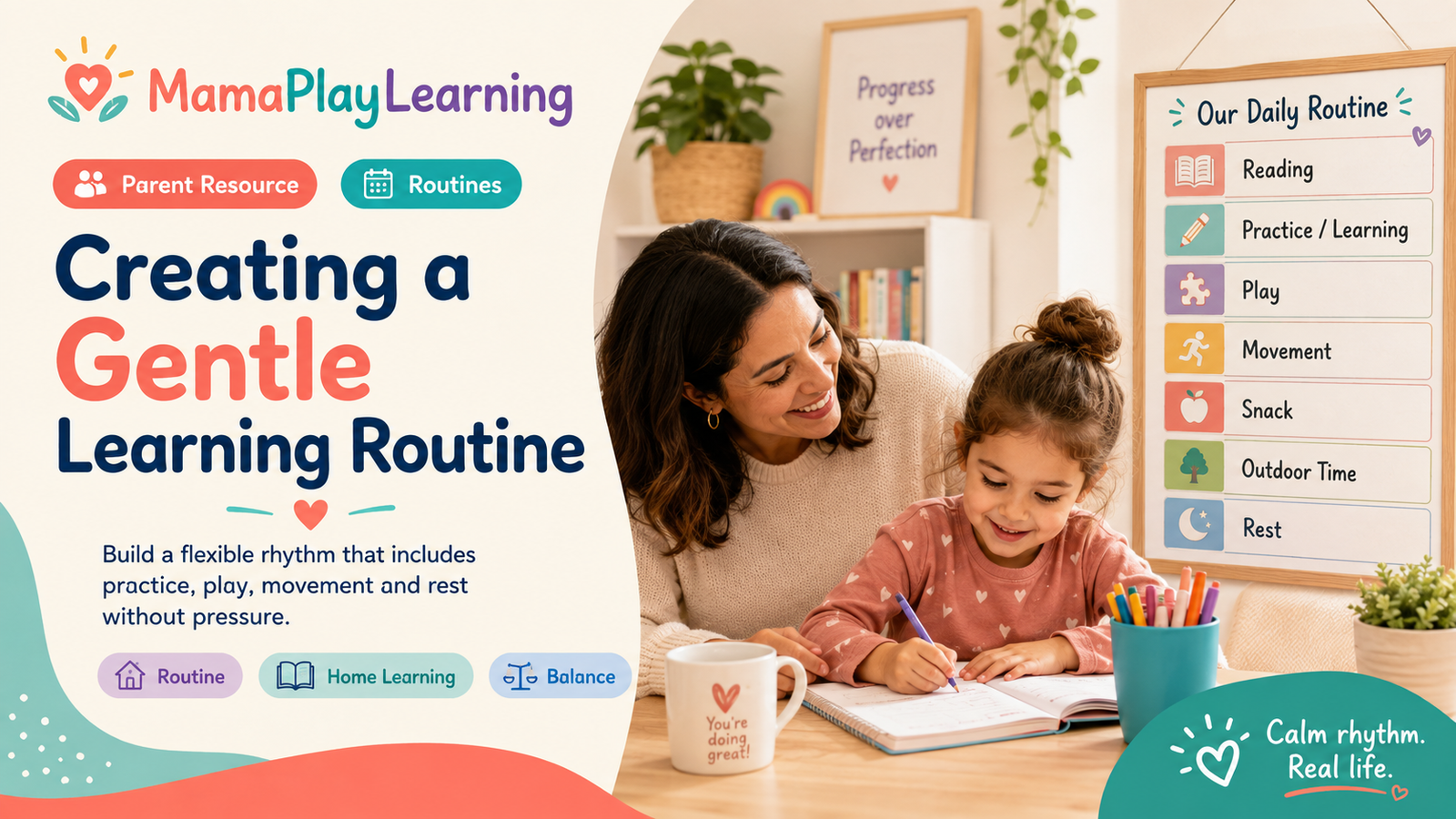
Use Visual Cues If Helpful
Some children respond well to seeing the day laid out in pictures rather than hearing a long explanation.
A simple visual routine can show:
- Book
- Practice
- Play
- Snack
- Outside
- Rest
This can help children know what is happening now and what is coming next.
Keep it short
You do not need a board filled with every step of the day. A few important pictures are often enough.
Let the Routine Flex When Needed
A routine is helpful because it creates predictability, but it should still be able to bend.
If your child is tired, sick, extra emotional, deeply involved in play or dealing with a busy family day, it is okay to adjust.
You might:
- Shorten practice time
- Skip a planned worksheet
- Move the activity later
- Replace a skill task with a story
- Spend more time outside and less time at the table
Flexibility protects the routine from feeling like pressure.
Watch for Signs the Routine Is Too Heavy
Sometimes the routine itself is not the problem. The problem is that too much has been added to it.
Signs may include:
- Frequent resistance before activities begin
- Meltdowns during short tasks
- A child who looks tired, bored or frustrated quickly
- Loss of interest in things they usually enjoy
- Parents feeling stressed and unable to keep up
If that happens, the answer is often to simplify, not to push harder.
The Adult’s Role Is to Guide, Not Control
A gentle routine works best when the adult provides structure without trying to control every moment.
You can guide the day by:
- Choosing one or two main learning moments
- Keeping materials ready and easy to reach
- Using a calm transition phrase
- Offering limited choices
- Stopping when the child clearly needs a break
This helps children feel supported rather than managed.
Consistency Matters More Than Perfection
You do not need to do the routine perfectly every day.
Some days will be smooth. Other days will be messy. Some days may only include one book and one short activity—and that still counts.
Children benefit most from an overall sense of rhythm and warmth, not from an adult trying to keep the day flawless.
Helpful Supplies for a Gentle Routine
You do not need a lot of materials to create a simple home learning rhythm. The products below are optional ideas for families who want a few reusable tools.
Optional Routine Tools
Visual Routine Cards
Helpful for showing simple parts of the day such as book time, play, snack, outside and rest.
View Routine CardsLow Book Basket
A simple basket keeps a few books visible and easy to reach during reading time.
View Book BasketsVisual Timer
Useful for helping children understand when a short activity begins and ends.
View Visual TimersOpen-Ended Play Materials
Building toys, art tools or simple manipulatives can make the play portion of the day feel rich and flexible.
View Play MaterialsA Reminder for Busy Parents and Caregivers
You do not need a full classroom setup to support your child at home.
A short story, a few minutes of practice, some movement, open-ended play and time to rest can already create a meaningful rhythm.
What matters most is not how impressive the schedule looks. What matters is whether the routine feels calm, realistic and supportive for your child and your family.
MamaPlayLearning Takeaway
A gentle learning routine should create rhythm without pressure.
Build around the day you already have, keep practice short, protect time for play and movement, and let rest be part of the plan. A simple, flexible routine can support learning far better than a schedule that feels too heavy to keep.
Keep the learning flow simple and joyful
Explore MamaPlayLearning games, storybooks and free worksheets created to support early learning in realistic ways.